ইউএনএইচসিআরকে প্রকল্প বাস্তবায়নে স্থানীয় এনজিওদের অগ্রাধিকার দিতে হবে: জেআরপিতে স্থানীয়দের জন্য ৫% বরাদ্দ স্থানীয়করণ অঙ্গীকারের পরিপন্থী: জেআরপি-২০২৬ প্রকাশ পরবর্তি সিসিএনএফ-এর অবস্থান পত্র
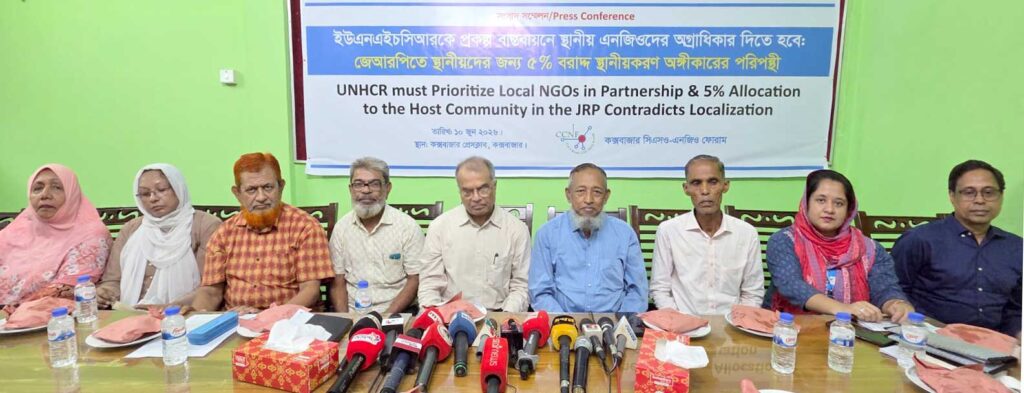
ইউএনএইচসিআরকে প্রকল্প বাস্তবায়নে স্থানীয় এনজিওদের অগ্রাধিকার দিতে হবে: জেআরপিতে স্থানীয়দের জন্য ৫% বরাদ্দ স্থানীয়করণ অঙ্গীকারের পরিপন্থী ভূমিকা: বাংলাদেশে রোহিঙ্গা সংকট এখন নবম বছরে পদার্পণ করেছে। কক্সবাজারে বর্তমানে ১২ লক্ষাধিক রোহিঙ্গা শরণার্থী বসবাস করছে, যা বিশ্বের বৃহত্তম শরণার্থী সংকট হিসেবে বিবেচনা করা হয়। ২০১৭ সাল থেকে বাংলাদেশ সরকার, স্থানীয় জনগোষ্ঠী এবং দেশীয় সংগঠনসমূহ আন্তর্জাতিক সংস্থাগুলোর একসাথে […]
UNHCR must prioritize Local NGO in partnership and a 5% allocation to the host community in the JRP contradicts localization: CCNF Post Joint Response Plan 2026 Launching Position Paper
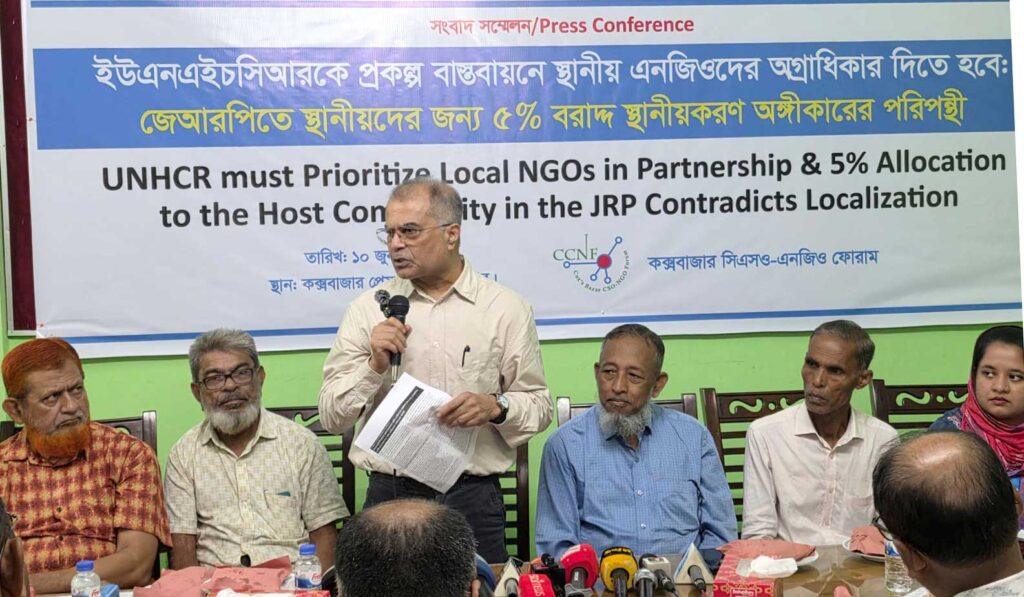
UNHCR must prioritize Local NGO in partnership and a 5% allocation to the host community in the JRP contradicts localization Background: In Bangladesh, the Rohingya crisis has now been ongoing for nine years, with over 1.2 million Rohingya refugees residing in Cox’s Bazar, making it the world’s largest refugee crisis. Since 2017, the Bangladesh government, […]
সিসিএনএফ (CCNF) ও ইকুইটি বিডি (EquityBD)-এর যৌথ বিশ্লেষণ: যৌথ সাড়াদান পরিকল্পনা (JRP) ২০২৫-২০২৬ জেআরপিতে স্থানীয় সংগঠনগুলোর কাছে ১% এরও কম বাজেট: প্রয়োজন একটি সুনিদিষ্ট স্থানীয়করণ ও প্রত্যাবাসন রোডম্যাপ
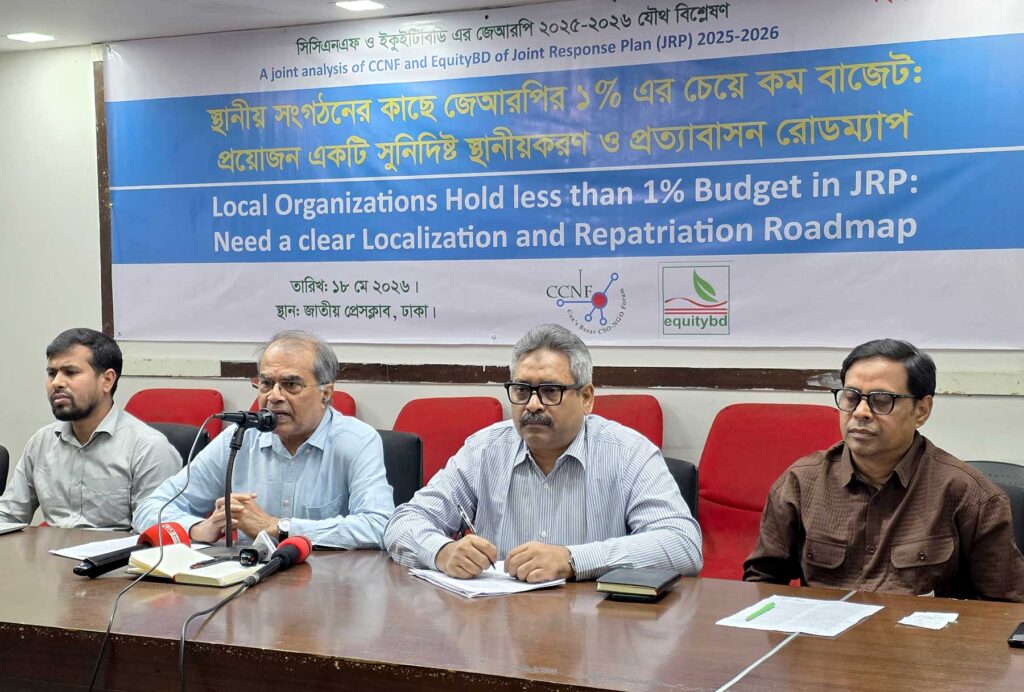
পটভূমিঃ বিগত বছরগুলোতে মানবিক সংস্থা, আন্তর্জাতিক এনজিও, জাতিসংঘের বিভিন্ন সংস্থা এবং স্থানীয় ও জাতীয় পর্যায়ের অংশীজনরা যৌথভাবে রোহিঙ্গা শরণার্থী এবং কক্সবাজারের ক্ষতিগ্রস্ত স্থানীয় জনগোষ্ঠীর চাহিদা মোকাবিলায় যৌথ সাড়াদান পরিকল্পনা (Joint Response Plan – JRP) প্রণয়ন করে আসছে। জেআরপি হচ্ছে রোহিঙ্গা মানবিক সহায়তার প্রদানের পরিকল্পনা ও তহবিল সংগ্রহের কাঠামো, যেখানে বিভিন্ন সংস্থা খাতভিত্তিক ও অগ্রাধিকারভিত্তিক প্রয়োজনীয় […]
CCNF and EquityBD Joint Analysis of Joint Response Plan (JRP) 2025-2026: Local organizations Hold less than 1% budget in JRP: Need A Clear Localization and Repatriation Roadmap
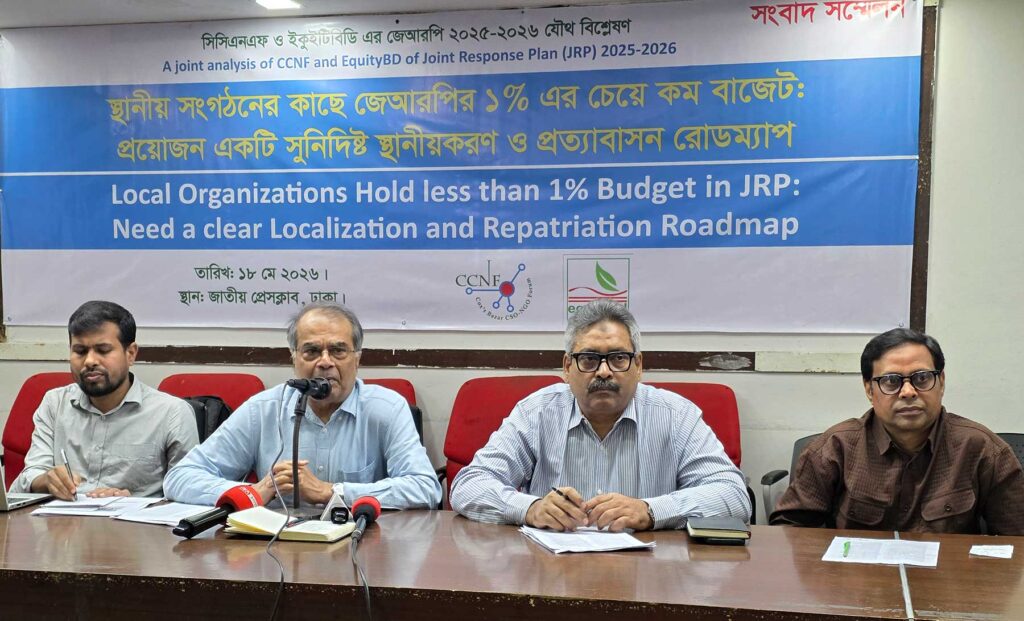
Background: Over the years, humanitarian organizations, international NGOs, UN agencies, and local and national actors have jointly developed the Joint Response Plan (JRP) to respond to the needs of Rohingya refugees and the affected host communities in Cox’s Bazar. The JRP serves as the main humanitarian planning and fundraising framework, outlining sectoral priorities and the […]
কক্সবাজারে বাংলাদেশের সার্বভৌমত্ব প্রতিষ্ঠা করতে হবে : স্থানীয় সরকার ও জনগনের অংশগ্রহণ জরুরি
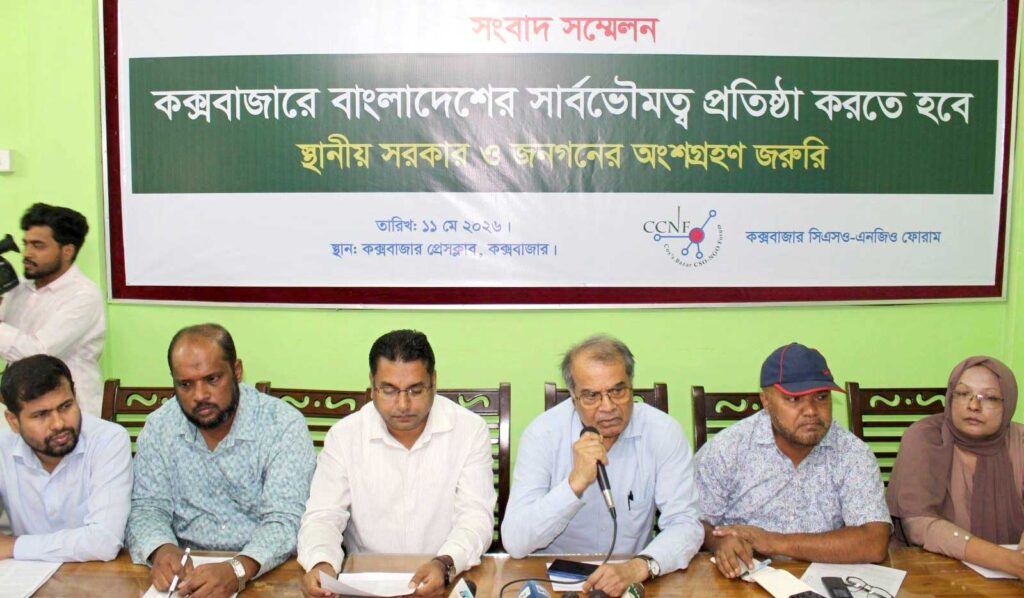
১. পটভূমি: কক্সবাজারে ১৩ লক্ষাধিক রোহিঙ্গার উপস্থিতি বর্তমান বিশ্বের অন্যতম বৃহত্তম এবং দীর্ঘস্থায়ী মানবিক সংকট হিসেবে বিবেচিত। ২০১৭ সালে এই সংকটের শুরু থেকে স্থানীয় জনগোষ্ঠী এবং স্থানীয় সংস্থাসমূহ ছিল প্রথম সাড়াদানকারী। পরে স্থানীয়, জাতীয় এবং আন্তর্জাতিক এনজিও, এবং জাতিসংঘ সংস্থাগুলো রোহিঙ্গাদের মানবিক সহায়তা প্রদানে অত্যন্ত গুরুত্বপূর্ণ ভূমিকা পালন করে আসছে। কিন্তু কিছু সমস্যা দিনদিন আরো […]
GRAND BARGAIN ANNUAL MEETING 2024: CALL FOR ACTION
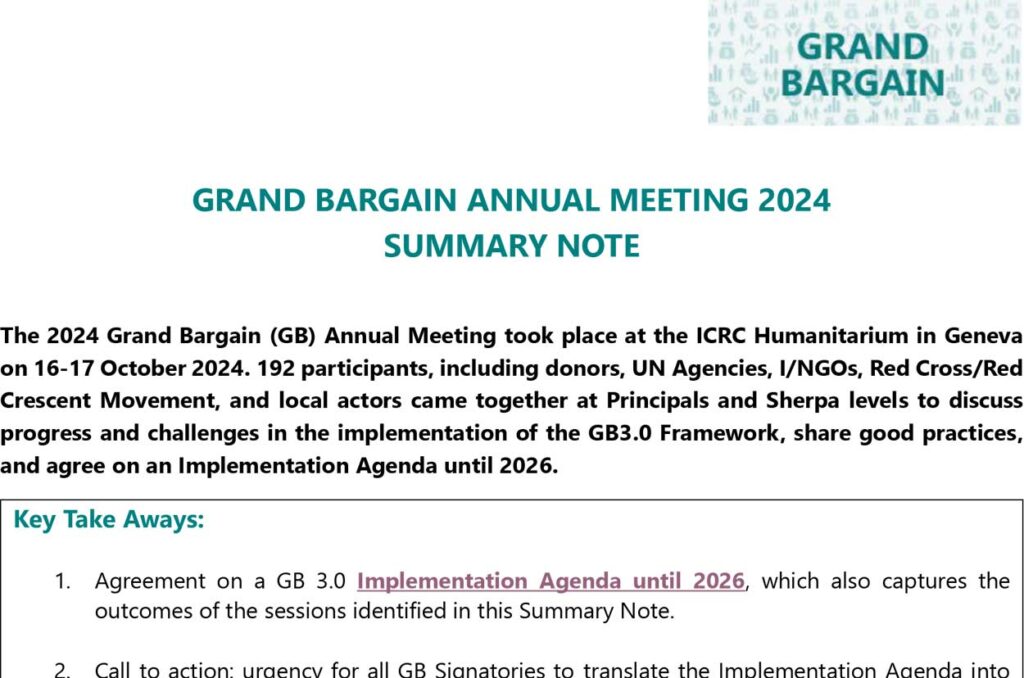
The Grand Bargain (GB) Annual Meeting 2024 was held on October 16-17 in Geneva, bringing together donor countries, UN agencies, I/NGOs, the Red Cross/Red Crescent Movement, and local actors, who were central to the discussions. The GB Principal and Sherpa, along with ambassadors, reviewed both the progress and challenges of the GB 3.0 Framework, urging all […]
Key Messages: Ration cuts in the Rohingya refugee response: 5 March 2023, Cox’s Bazar
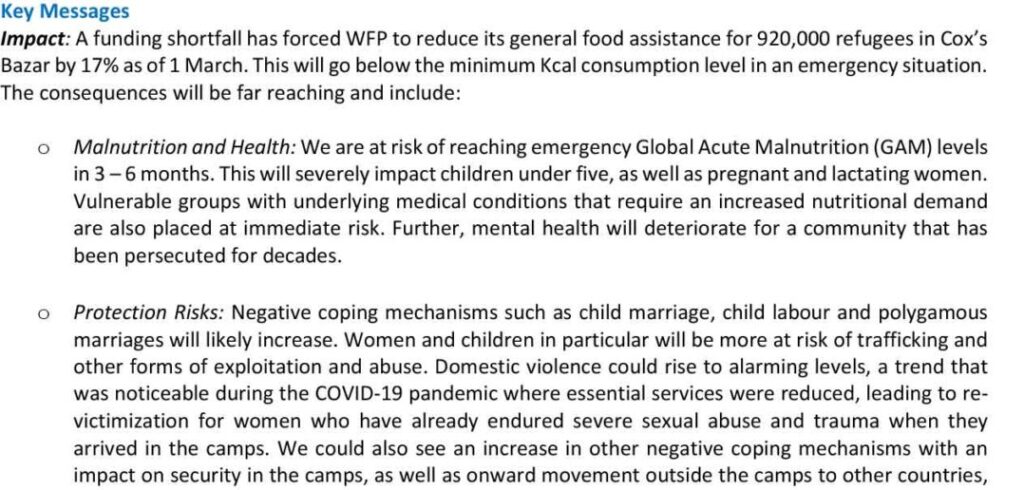
[Download Key Message]
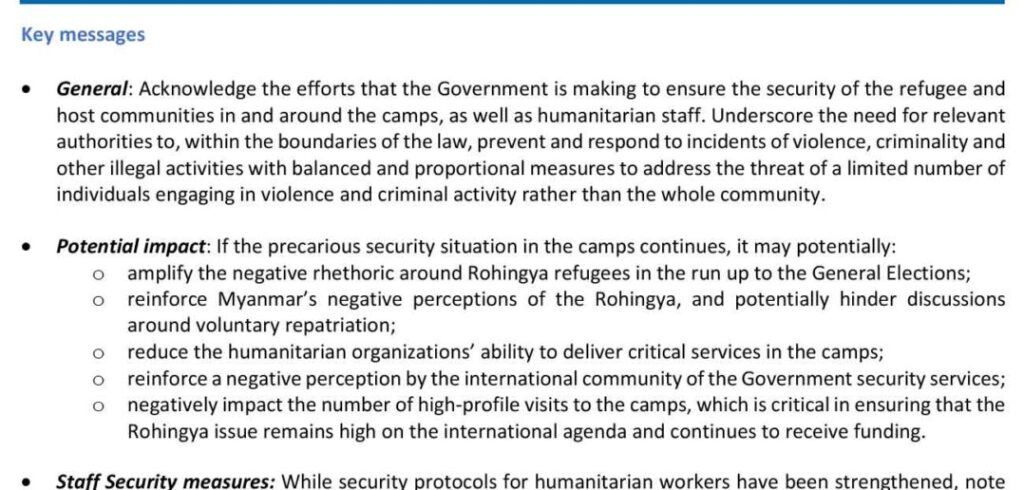
Key Messages: Security Situation in the Rohingya Refugee Camps (For SEG Co-Chairs): 26 February 2023, Cox’s Bazar
[Download Key Message]
2023 Joint Response Plan Rohingya Humanitarian Crisis_ January-December 2023
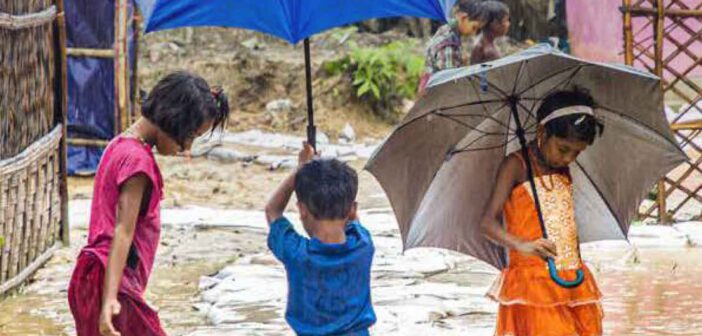
Bangladesh is temporarily sheltering over one million Rohingya refugee/FDMNs from Myanmar, while being compelled to assuming enormous amounts of her limited resources to meet costs and impacts incurred upon her economy, society, and environment. To avoid irreversibility of such impacts, Bangladesh looks forward to the response of the international community that is proportionate to Bangladesh’s […]
Risk Sharing in Practice: Success Stories, Enablers, and Barriers to Risk Sharing in the Humanitarian Sector

Sharing similar objectives and collaborating in the same delivery chains requires common risk management approaches Humanitarian action is primarily intended ‘to save lives, alleviate suffering and maintain human dignity during and in the aftermath of crises.’1 However, when looking at the contexts where the 274m people most urgently in need of assistance are located2, it […]