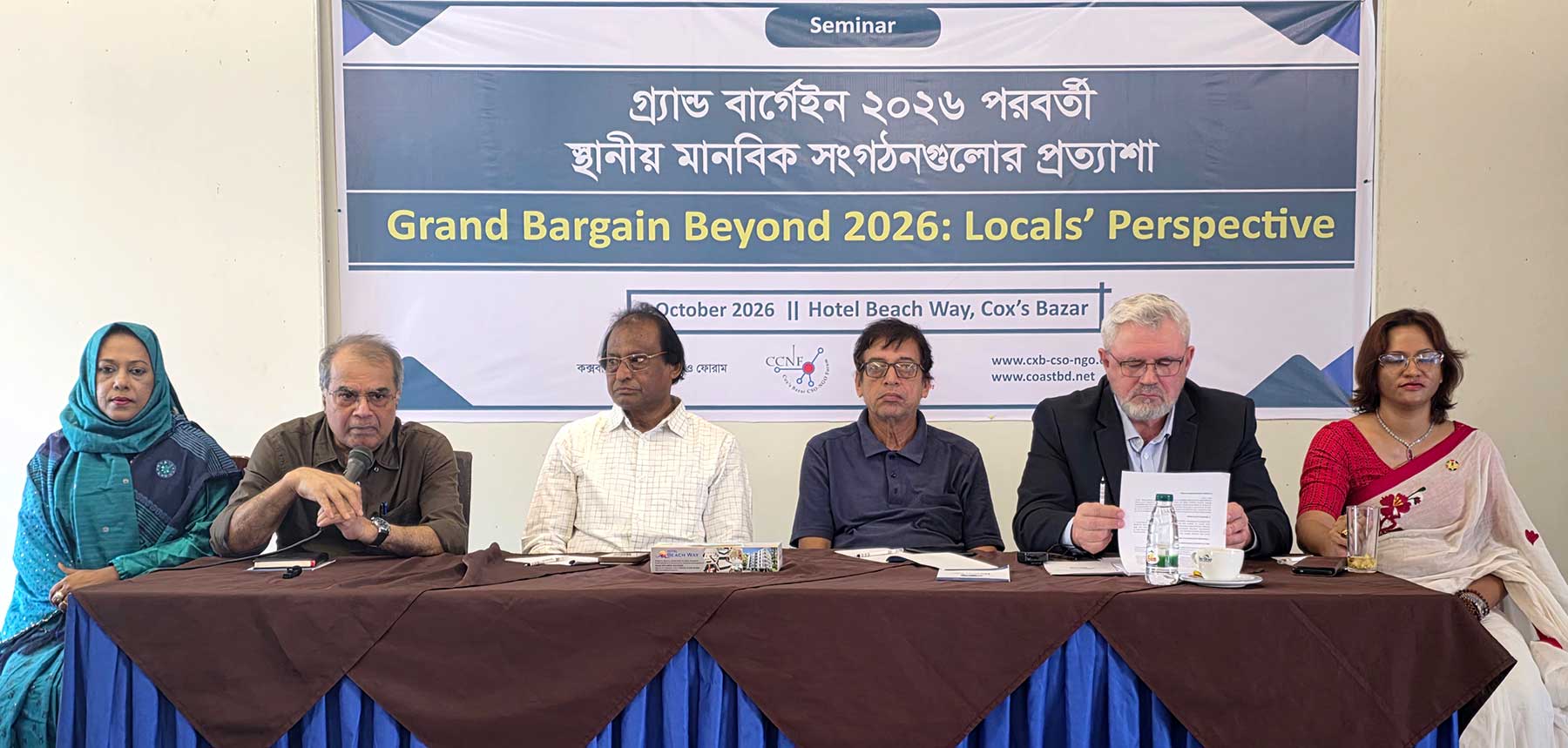
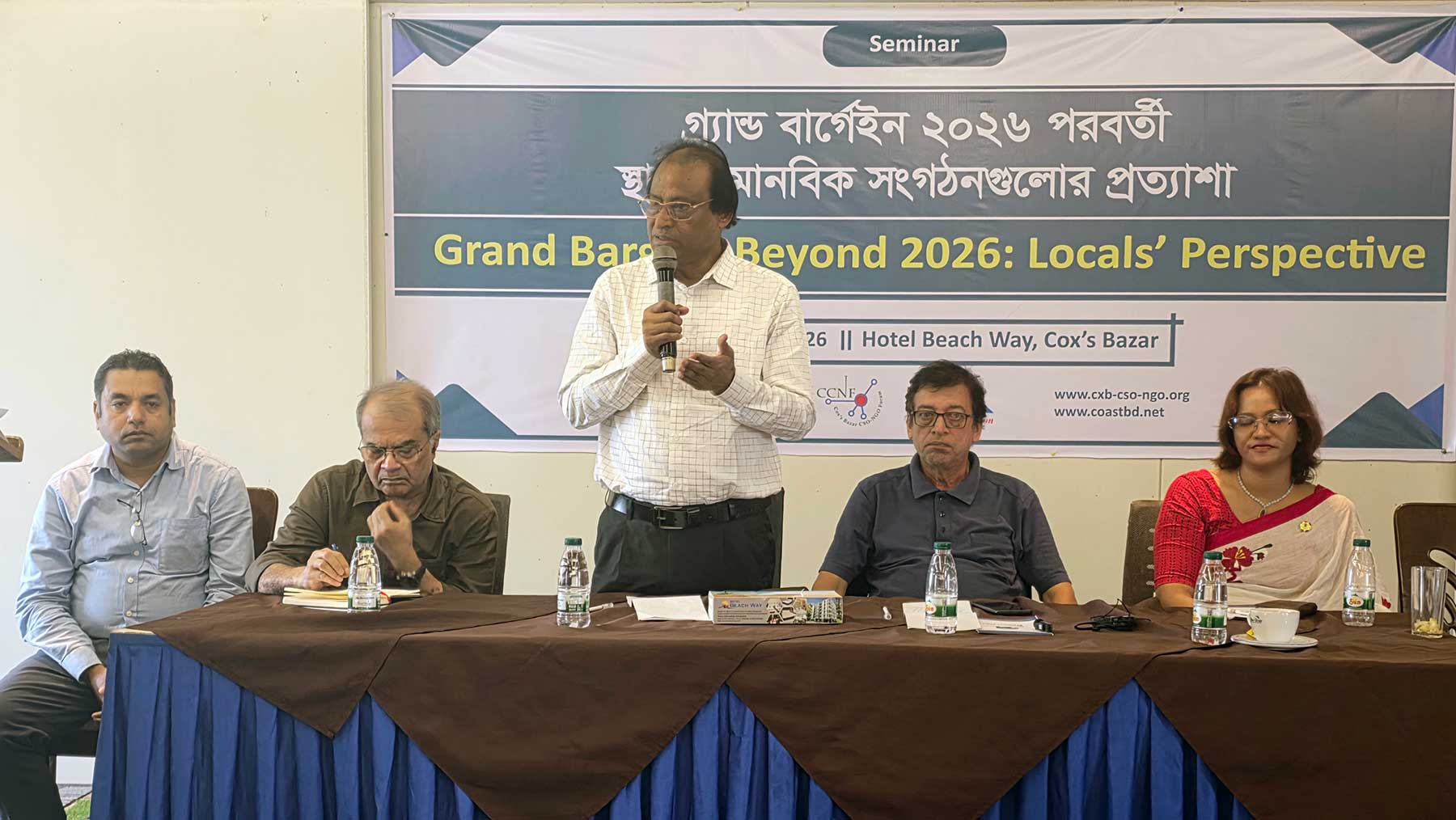
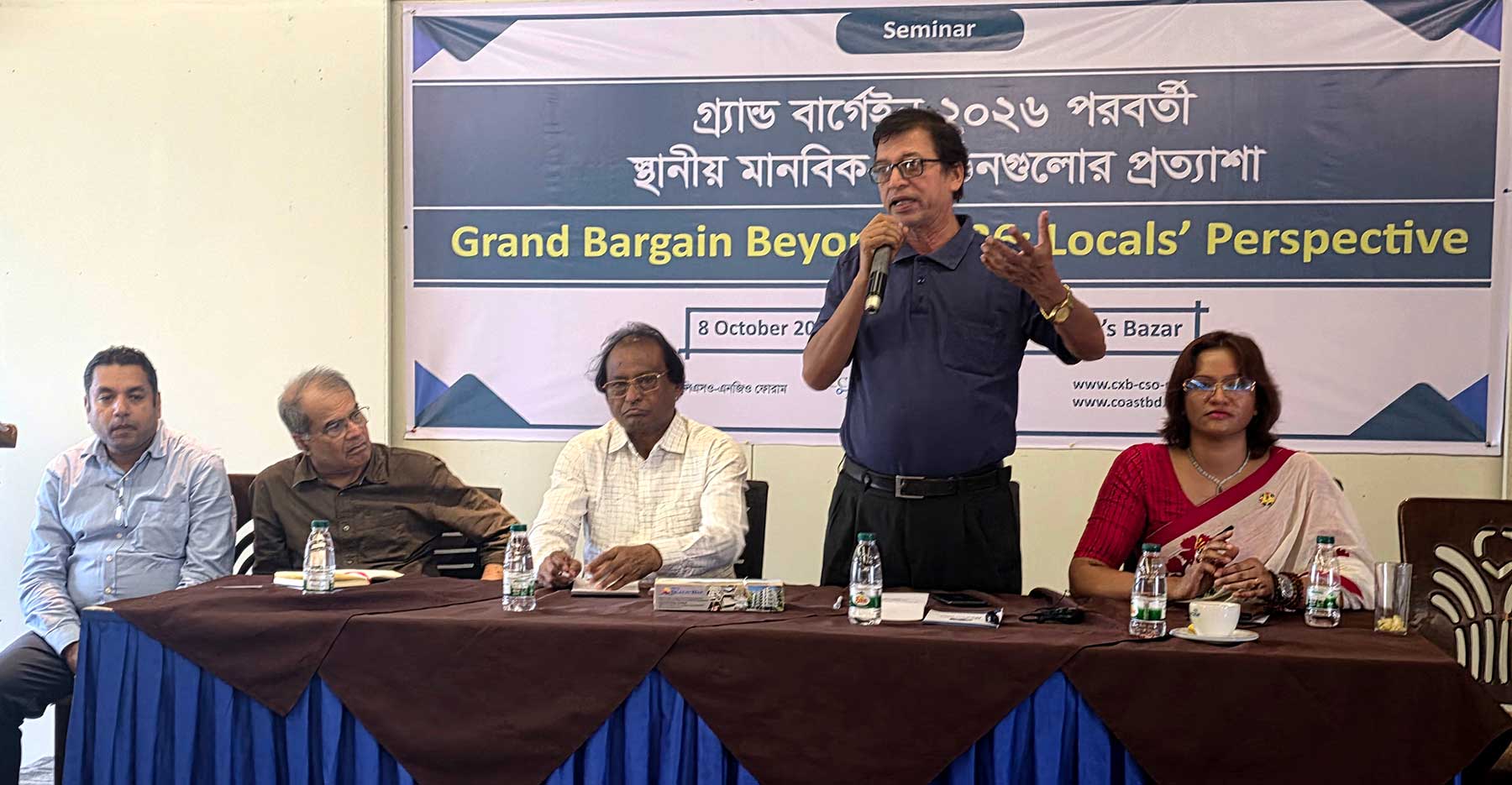
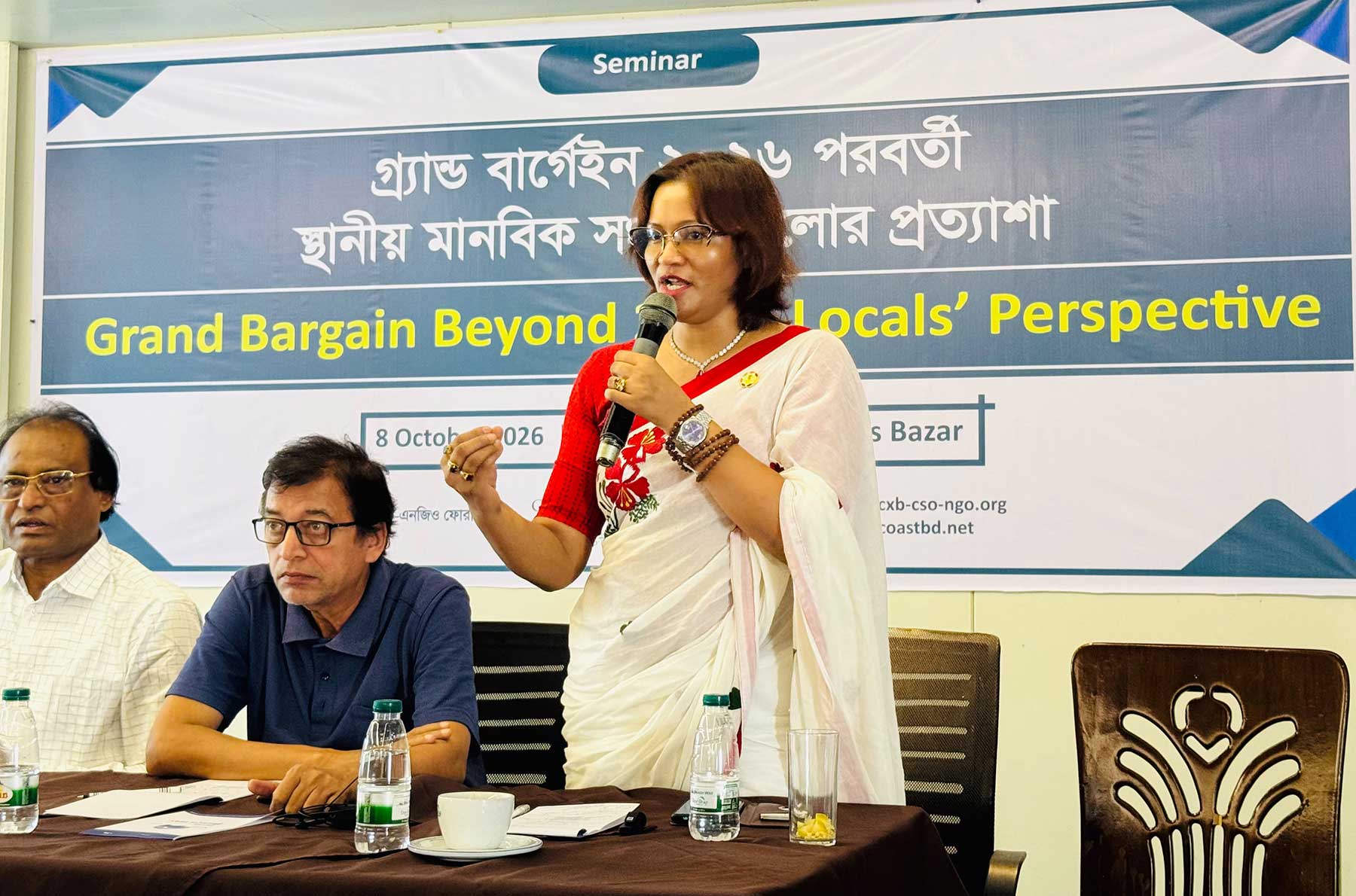
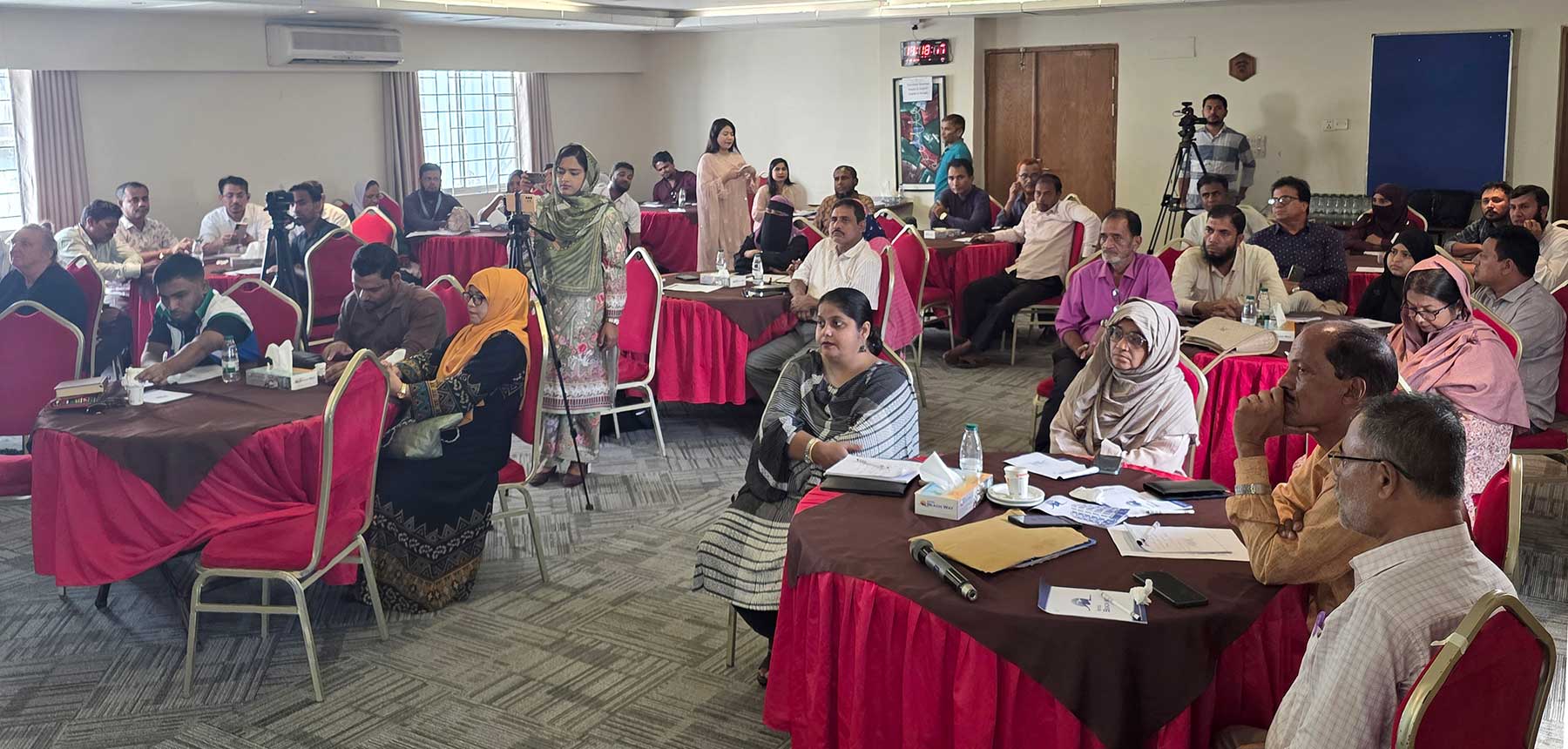
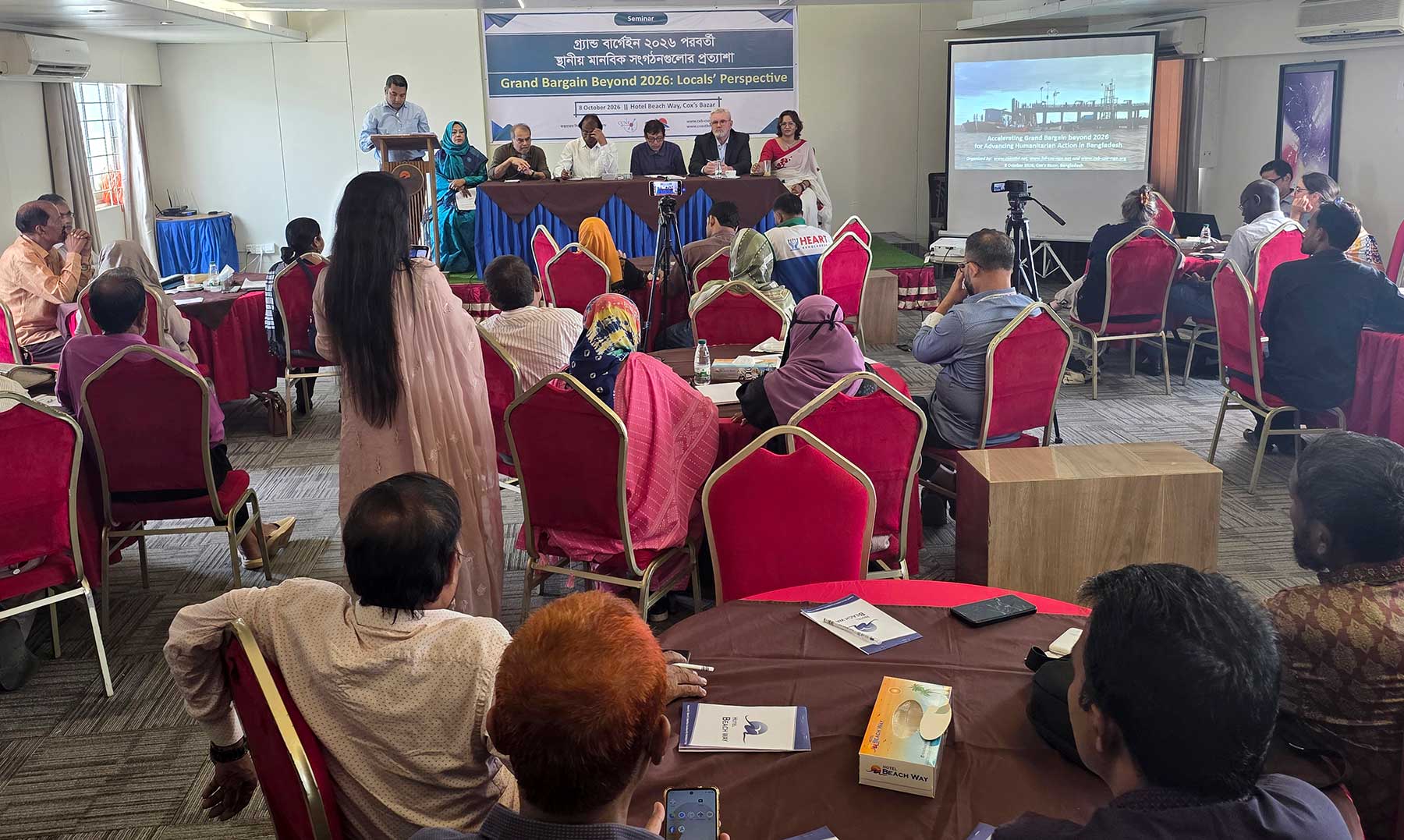
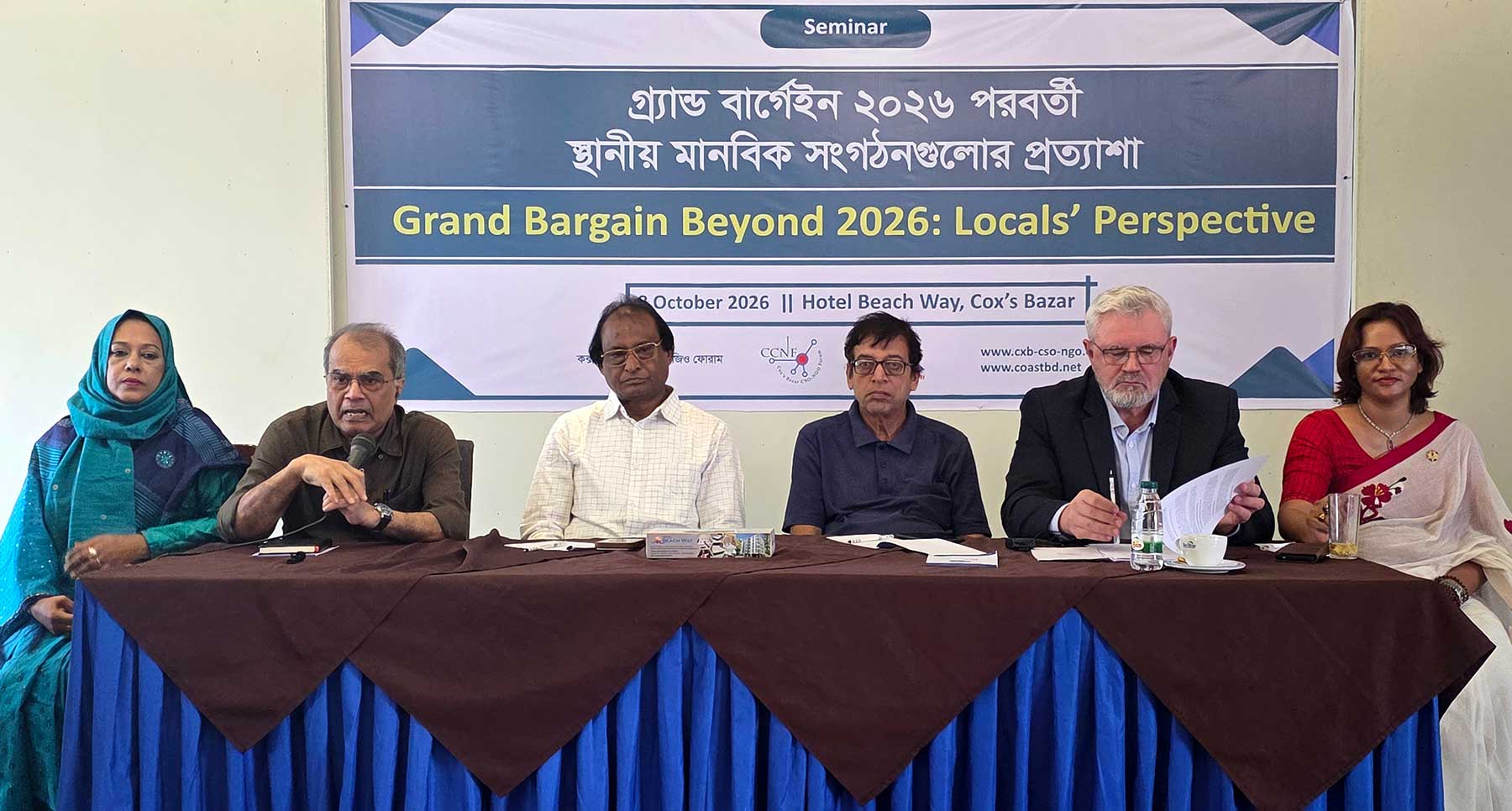
Cox’s Bazar, 8 October 2026: Humanitarian actors have called for an effective implementation of the Grand Bargain commitments in Bangladesh that include localization of aid, equal partnership and quality funding to local national actors and accountability to the affected population. The Grand Bargain commitment was adopted in Istanbul in May 2016 at the World Humanitarian Summit and signed by around 71 parties, including different donor countries, UN agencies, INGOs and networks to advance humanitarian action. Effective implementation of the Grand Bargain agenda at the country level requires a coordinated plan of the UN, INGOs and local humanitarian actors. However, the speakers questioned the progress of some localization commitments in Bangladesh, which is against the spirit of promoting the Grand Bargain localization agenda. They said this during the seminar titled “Grand Bargain beyond 2026: Locals’ perspective,” organized by COAST Foundation, BDCSO Process, and Cox’s Bazar CSO-NGO Forum (CCNF) today in Cox’s Bazar, moderated by Md. Jahangir Alam, General Secretary of the CCNF. The keynote presentation was delivered by Md. Iqbal Uddin of COAST Foundation.
Distinguished participants included Nilima Akhter, executive director of Agrajatra; Mujibur Rahman, the advisor of Shushilan; Sheuly Sharma, executive director of JNUS; Igor Ciobanu, Head of Rohingya Coordination Platform in Cox’s Bazar; Johanna Reina Picalua, Protection Sector Coordinator of the UNHCR in Cox’s Bazar; Corinne Bali, the Coordinator of the NGO Platform Cox’s Bazar; Musa Drammeh, the UNICEF office representative in Cox’s Bazar; M Rezaul Karim Chowdhury, Executive Director of COAST Foundation; Abul Kashem, executive director of Help Cox’s Bazar;
Identifying gaps, Md. Iqbal Uddin, in his keynote, said the Rohingya response coordination platform comprises eight major sectors, all led by UN agencies, with only one sector co-led by an INGO. A national or local NGO leads no sector. He also highlighted that the UN agencies have secured 87.96% of the total Joint Response Plan (JRP) funding in 2026, only 7.78% secured by International NGOs and 4.26% by National NGOs. Local NGOs received no funding at all. That is unfortunate, he added.
M Rezaul Karim Chowdhury said that, in the name of direct funding, a few international agencies are providing funding to one specific local NGO with 34 projects; one homegrown organization, now operating internationally, also receive fund as a national NGO. Such practice is not fair and deprives other local NGO’s right to receive funding. Igor Ciobanu said we will make sure that more funds go to local NGOs in the coming years and work collectively to remove the barriers. Nilima Akhter said that there is no local NGO’s direct participation in the current Joint Response Plan. How could we ensure localization of aid then? She also demands direct funding to Women-led organizations. Corinne Bali said that, as an NGO Platform, we will fight with the UN agencies and INGOs to strengthen localization and a locally-led Rohingya response. Abul Kashem emphasized the collective action needed from local NGOs to engage in the upcoming Rohingya response roadmap process and advocate for a locally-led response. Sheuly Sharma highlighted safe, voluntary and dignified repatriation of the Rohingya. Mujibur Rahman pressed for shifting the power to the local NGOs, with 50% direct and flexible funding for them.
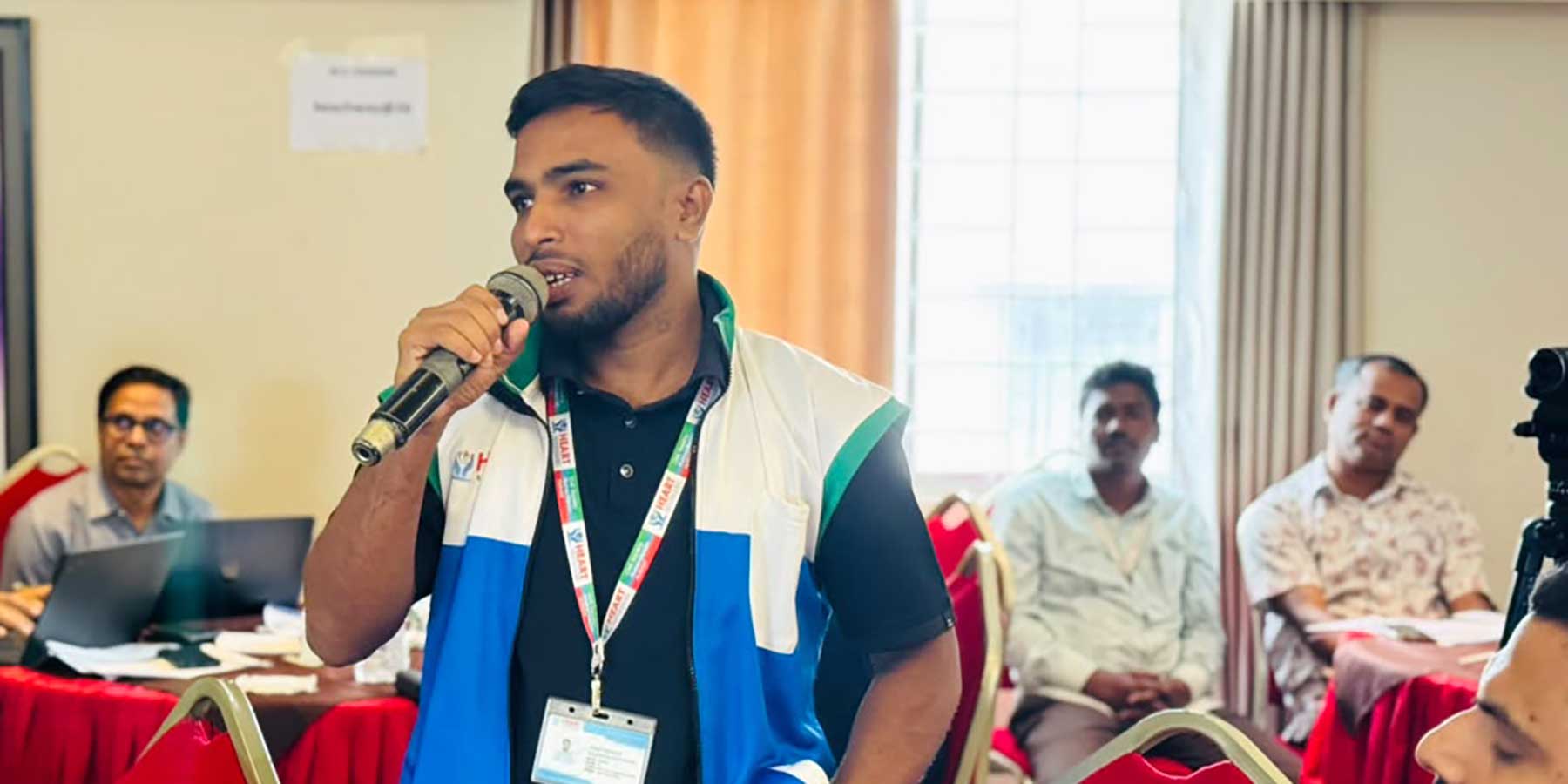
Additional speakers included Nurul Amin Siddique of ZUZUP, Syeda Dulary Iqbal of GNBKS; Mahabub Alam from PHALS Bangladesh; Shapna Mag from Aid Cumilla; Ramjan Ali Shikder of AJS Cox’s Bazar; Nasima Akhter of Youth Forum Cox’s Bazar; Mustafizur Rahman Kazal of HFRF; Joynal Abedin of YPSA; Anisul Islam of DEPECO;
Mohammad Ali from Step for Humanity; Anjuman Ara Begum from Rokeya Foundation; Amir Hossain from NGO Platform; Md. Afzal Hossain from Brahmanbaria TTC; and Mohammad Max from SBSKS, who shared insights on advancing localization of aid efforts in Rohingya response in Bangladesh.
Please download related paper [Bangla Press] [English Press] [Study Report on Localization of Aid in Rohingya Response 2026] [Presentation on Accelerating Grand Bargain beyond 2026 for Advancing Humanitarian Action in Bangladesh]
Photos
 |
 |
 |
 |
 |
 |
 |
 |